A dryer that tumbles without heat, squeals, or quits mid-cycle is usually a fixable machine, not a dead one. We diagnose it for $95, put the repair price in writing, and the fee counts toward the work if you approve it.
Most dryer calls we run in Kitsap County come down to a short list of parts: heating elements and gas igniters, thermal fuses, cycling thermostats, drum rollers, idler pulleys, belts and door switches. None of those failures mean the dryer is finished. A technician who carries the common parts can usually sort the problem out in one visit, and when a part does have to be ordered, you'll know the full price before we order it.
There's a local wrinkle worth mentioning: laundry in this part of Washington works harder than the machine's designers probably assumed. Loads go in damper here — line-drying isn't realistic for most of the year, and garages and laundry rooms in Poulsbo and Bremerton often sit cool and humid. That means longer runtimes, more strain on the heating circuit, and lint that packs down denser in the vent run. A fair number of "broken" dryers we see are actually healthy machines pushing against a blocked vent, which is why airflow is one of the first things we measure.
That pattern points at airflow, not heat. If the exterior flap hardly opens with the dryer running, the duct is likely packed. It's the most common dryer complaint we hear from Silverdale and Poulsbo households.
A thermal fuse is a one-time safety device — when the dryer overheats even once, the fuse opens and the machine goes quiet. Replacing the fuse without finding the overheat cause invites a repeat, so we check both.
Drum rollers and the idler pulley wear gradually in damp garages. The noise is annoying long before it's fatal, but a worn roller that finally seizes can take the belt with it.
These three produce similar symptoms and get mixed up constantly. A failed heating element usually means no warmth at all. A tired cycling thermostat produces lukewarm, stop-and-go heating. A choked vent produces real heat that has nowhere to go, so the safety thermostat keeps cutting the element off. We separate them with a meter and an airflow check rather than guessing, because the parts range from inexpensive to fairly dear and swapping the wrong one solves nothing.
On most gas dryers the igniter glows, the gas valve coils open, and the burner lights. When the igniter glows and then everything shuts down, the flame sensor or the valve coils are the usual suspects. When there's no glow at all, the igniter itself or its fuse has gone. All of these are ordinary bench repairs — the burner assembly on common Whirlpool and GE platforms is well understood and parts are readily available on this side of the water.
Dryer exhaust is warm and wet. In a mild dry climate it exits the duct before much condenses. Here, especially from October through May, the moisture condenses inside cooler duct sections — exterior walls, crawl-space runs — and damp lint sticks where dry lint would blow through. Homes near the water in Kingston and Bainbridge also deal with stiff, salt-corroded exterior flaps that don't open fully. If your dryer's runtimes creep up every winter, the duct is the first place worth looking.
Often, yes — dryers are mechanically the simplest major appliance in the house. A drum, a motor, a belt and a heat source. If the drum and motor are sound, a heating repair or a roller kit can reasonably buy years of service, and we'll say so. If the motor itself is failing on a machine that age, we'll tell you plainly that the math favors replacement. Either way you'll have a written number to decide with, and the $95 diagnostic is all you've spent to get it.
The technician runs the dryer, measures heat and airflow, opens the cabinet as needed, and finds the actual fault. You get an exact written quote — parts, labor, tax. Approve it and we complete the repair, usually the same visit when the part is on the van; decline it and you owe the $95 and nothing else. We don't lean on anyone, and we don't invent extra problems to pad the ticket.
Repairs start from $228 for the simpler jobs; heating and control repairs run higher. The written quote comes after a $95 diagnostic, and that fee rolls into the repair price if you approve the work.
Yes. Electric models are the majority in Kitsap County, but we service gas burners, igniters and valve coils as well, across the common household brands.
Treat it seriously. A shorted element or heater wire is the usual cause, and repeated tripping deserves attention before the machine runs again. Leave it off and have it looked at.
Clearing the lint screen and checking the outside flap costs nothing and sometimes ends the problem. If runtimes stay long after that, the blockage is deeper in the run or the fault is internal — that's where a visit makes sense.
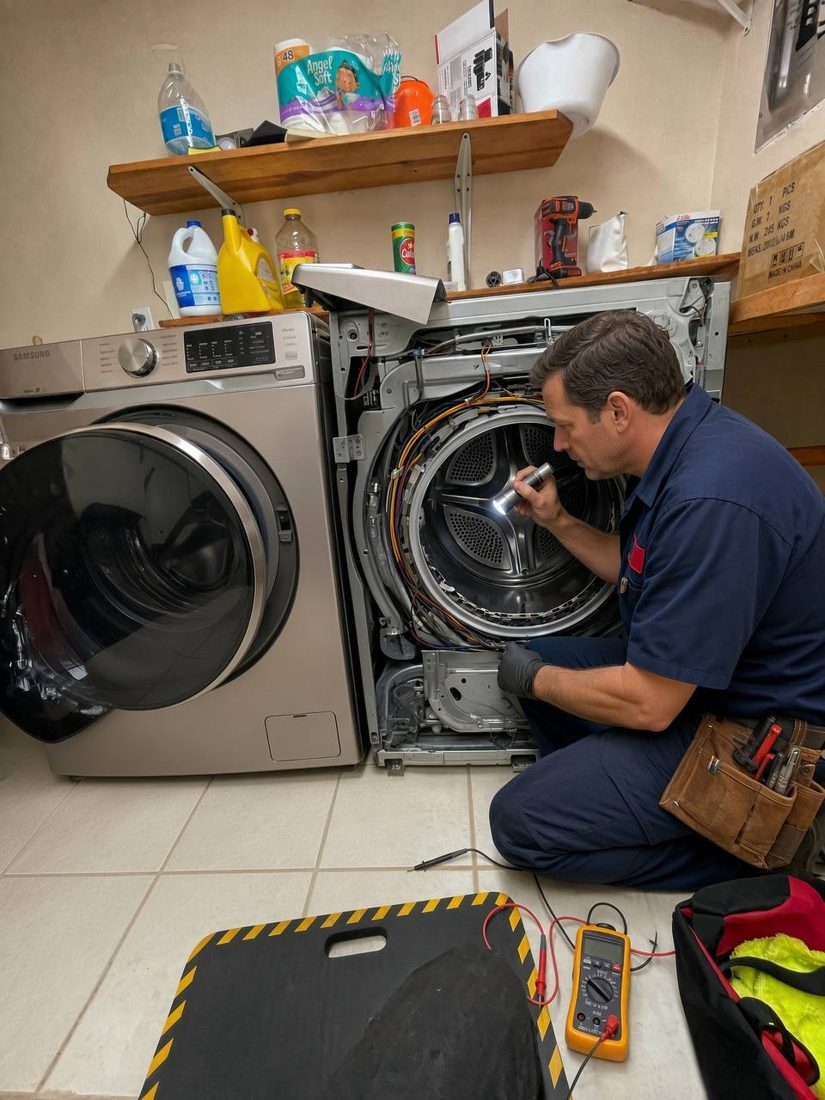
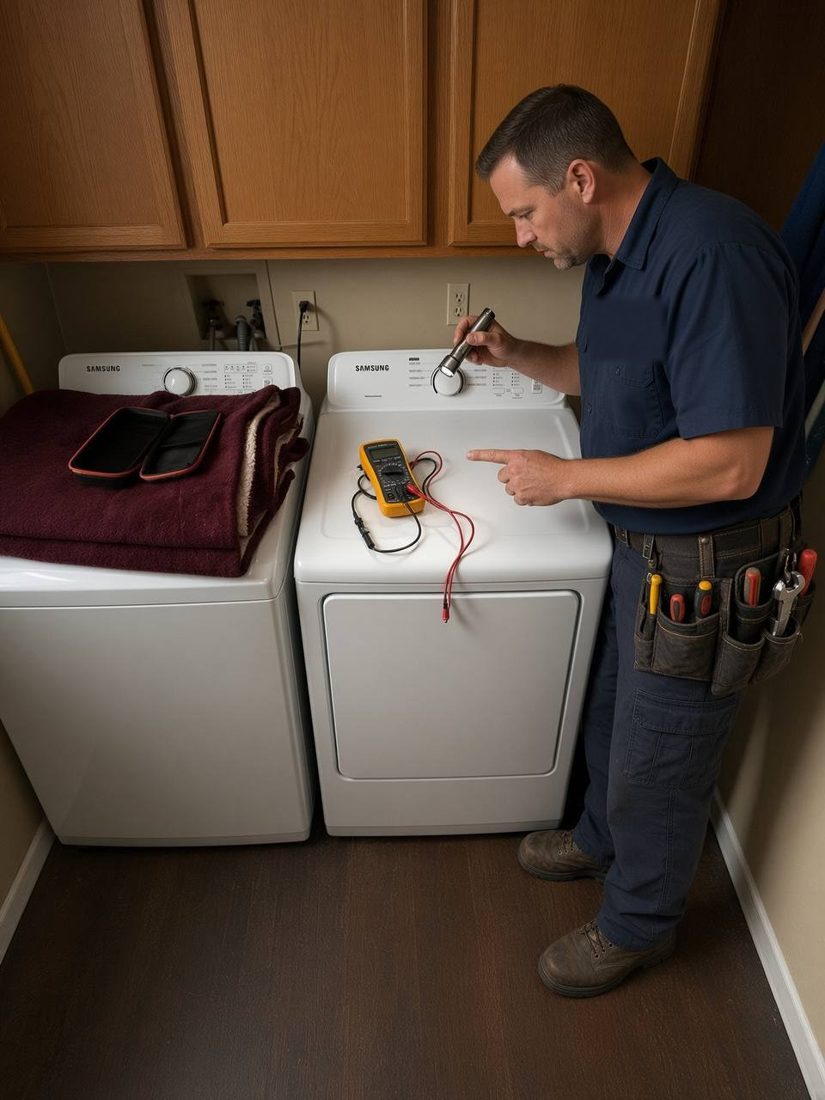
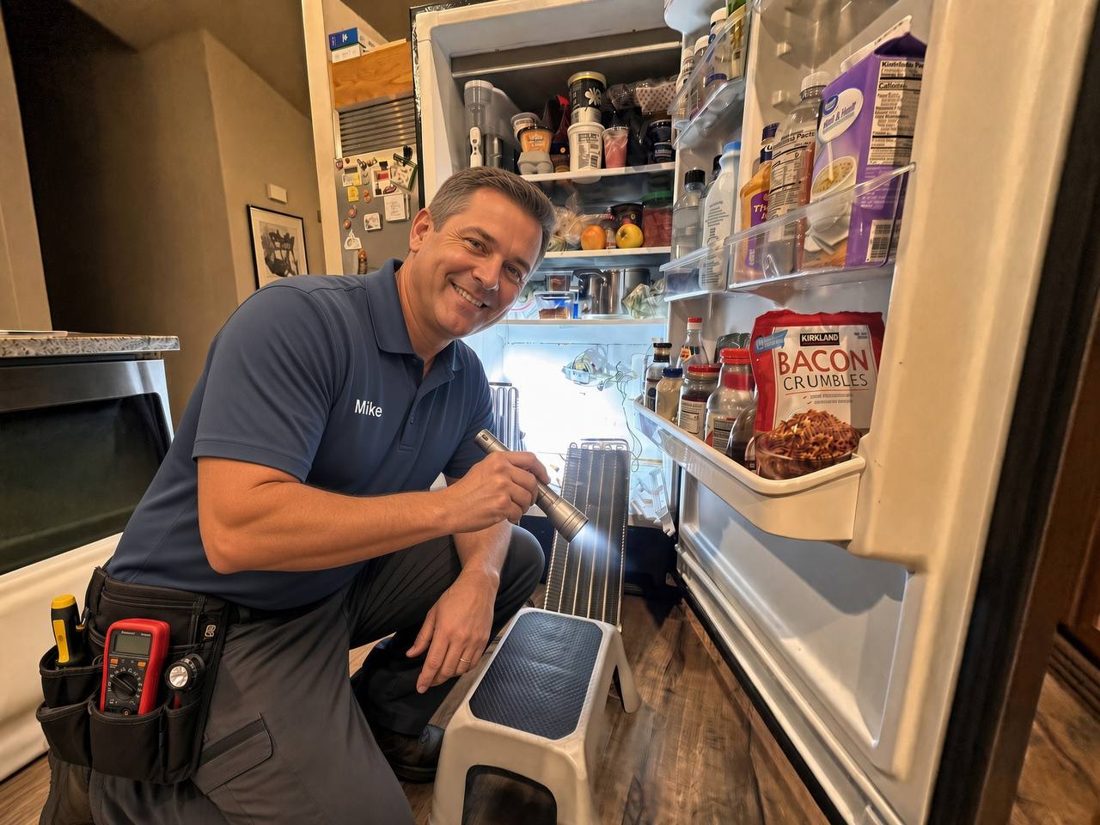
A few frames from recent visits around the county — no staging, just the day's route.
Tell us the symptom and your part of the county — we'll call back with the nearest window we honestly have and the $95 diagnostic stated up front.