No ice, hollow cubes, a bin that fills with one frozen block, water where it shouldn't be — small machine, surprisingly many failure points. We sort them out for a flat $95 diagnostic that applies to the repair.
An ice maker is a little assembly line — fill, freeze, harvest, repeat — and a fault anywhere on the line stops the whole show. The usual suspects: inlet valves that clog or weaken, fill tubes that freeze solid, ejector motors and modules, bail arms and sensors that think the bin is full, and water filters overdue by a year or two. Diagnosis means watching a full cycle and testing each station, which is exactly what the $95 visit covers.
Water is half the story of ice quality on this peninsula. Homes on Poulsbo and Silverdale city water see different mineral loads than well households out toward Hansville or Seabeck, and both show up in the ice — cloudy cubes, off tastes, scale in the valve screen. Some of what looks like a broken ice maker is really a filter or supply issue, and we'd rather find that for $95 than replace parts that were never the problem.
Confirm the bail arm or paddle isn't flipped to OFF, the freezer is at 0–5°F, and the water filter isn't ancient. Those three checks resolve a fair share of "broken" ice makers for free — and if they don't, you've saved the technician a step.
Undersized, shell-like cubes point at water starvation: a scaling inlet valve, a pinched line, or low pressure. It worsens gradually until the harvest jams. Caught early, it's one of the cheaper ice maker repairs.
Usually a slow leak from the fill valve dribbling between cycles, freezing layer by layer. Chipping out the block fixes the symptom for a week; replacing the weeping valve fixes the machine.
The ice maker rides on the freezer's cold but runs its own water and electrics, so it fails independently all the time. A frozen fill tube is the classic: a marginal freezer-door seal or a weak fill valve lets a trickle freeze in the tube, and no water ever reaches the mold again until it's cleared and the cause fixed. It's a small repair that looks mysterious from the kitchen side.
Modern residential ice makers are built as compact assemblies, and manufacturers price the whole unit close to the price of its major pieces. When the motor module or mold heater fails, replacing the complete assembly is often the durable choice, and it's what we'll usually quote — one part, one warranty, no chasing a second aging component next season. When a cheap fix genuinely solves it, that's what goes on the quote instead.
Nugget makers, clear-cube under-counter units and portable countertop machines are a different animal from fridge-door ice makers — they have pumps, condensers and, in some cases, sealed systems of their own. We service the common household standalone brands; for commercial machines in shops and restaurants we'll tell you honestly whether it's our territory or a commercial refrigeration outfit's. The diagnostic works the same either way: $95, findings in writing.
Off-flavors travel three routes: a spent filter, stale ice absorbing freezer odors, or the supply itself — more noticeable in well households around north Kitsap after heavy rain shifts the water table. Dump the bin, change the filter, and give it 48 hours. If the taste persists, the fill line or the mold surface may need attention, which is a service call rather than a filter run.
Water pressure at the valve, the valve screen, the fill tube, mold thermostat operation, a complete harvest cycle, and the bin sensor. Ten minutes of watching the machine actually work tells more than an hour of parts-swapping. You get the finding and the exact repair price on paper, the $95 applies to the work if you approve it, and if the honest answer is a filter and not a repair, that's what we'll tell you.
From $266, with complete assembly replacements and valve work quoted exactly after the $95 diagnostic. The fee is applied to any repair you approve.
The mainstream brands, yes — Whirlpool, GE, Samsung, LG, Frigidaire, Kenmore, KitchenAid and their relatives. A few boutique built-in brands are factory-service-only, and we'll tell you on the phone if yours is one.
Production drops when the freezer runs slightly warm or household water runs colder — both happen in Kitsap winters, especially with garage units. A modest slowdown can be seasonal; a stop is a fault.
If a sound, code-compliant supply line already exists behind the fridge, we can connect and test it as part of a visit. Running new plumbing through the house is a plumber's job, and we'll say so rather than improvise.
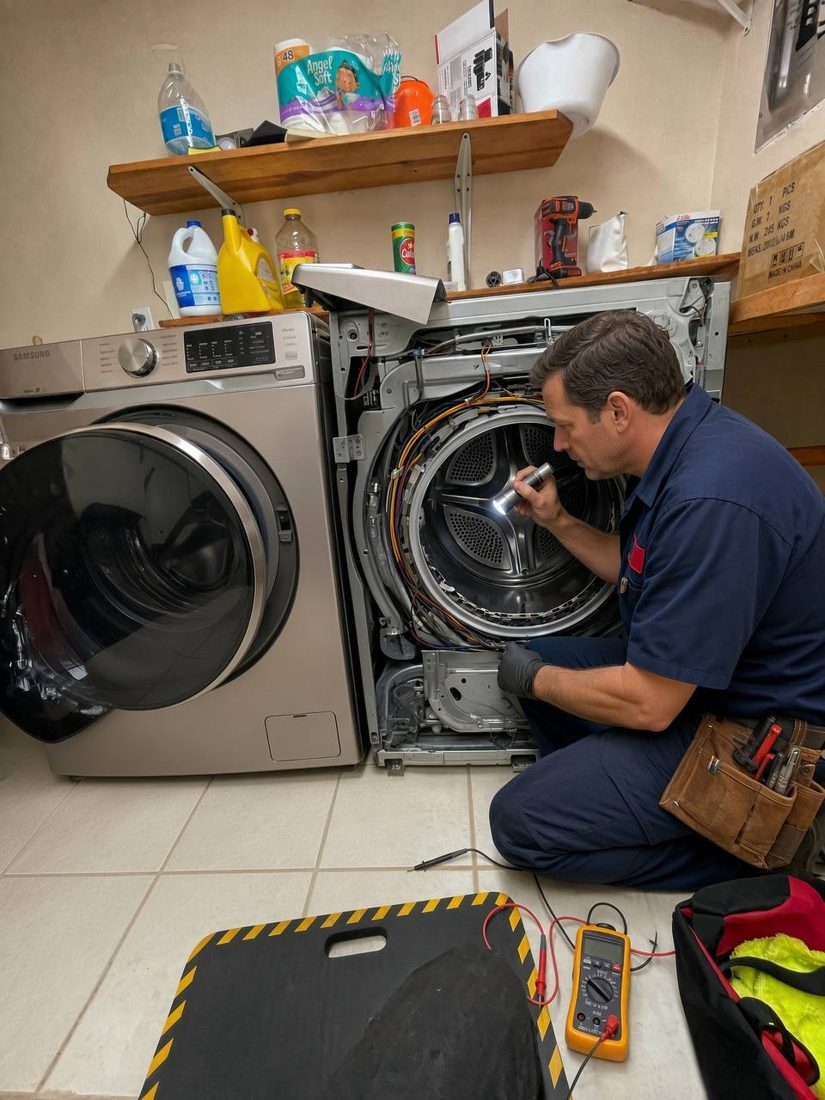
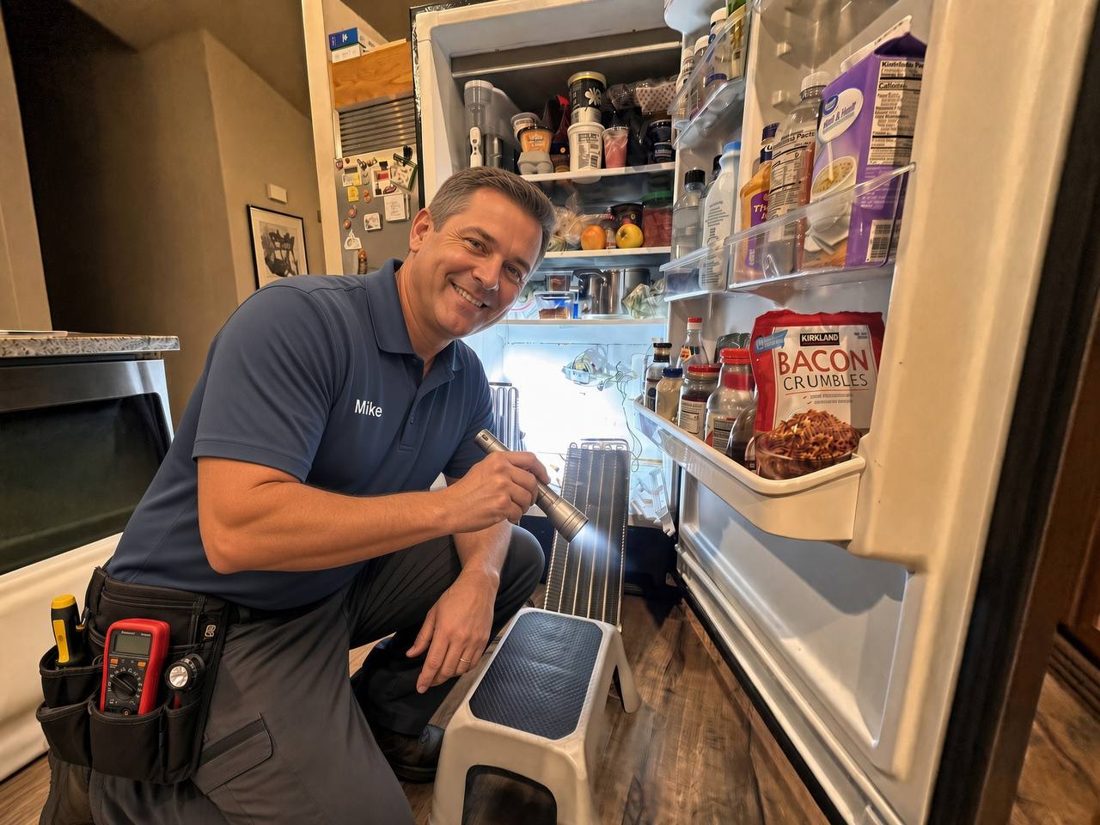
A few frames from recent visits around the county — no staging, just the day's route.
Tell us the symptom and your part of the county — we'll call back with the nearest window we honestly have and the $95 diagnostic stated up front.